G Tube A Simple and Complete Guide for Parents and Caregivers
When a child cannot eat enough food by mouth, parents often feel worried and confused. One medical solution that helps many families is a g tube. A g tube is a small feeding tube that goes directly into the stomach. It helps children get the food, water, and medicine they need to grow strong and healthy.
At first, hearing about a g tube may sound scary. But many parents later say it made daily life easier. In this guide, we will explain everything about a g tube in very easy English. You will learn what it is, why it is used, how it works, and how to care for it safely at home.
What Is a G Tube?
A g tube, also called a gastrostomy tube, is a soft tube placed through the belly into the stomach. It allows food and liquids to go straight into the stomach without using the mouth.
Doctors use a g tube when a child cannot eat enough by mouth. This may happen because of swallowing problems, medical conditions, or slow growth. The tube can be used short-term or long-term, depending on the child’s needs.
A g tube does not mean a child will never eat by mouth again. Many children still eat small amounts by mouth while using a g tube for extra nutrition.
Why Do Children Need a G Tube?
Every child is different, but doctors may suggest a g tube for many reasons. The main goal is always the same: help the child grow and stay healthy.
Common reasons include:
- Trouble sucking or swallowing food
- Medical conditions present at birth
- Slow weight gain or poor growth
- Needing extra calories every day
- Difficulty taking medicine by mouth
For example, a child who gets tired while eating may not finish meals. A g tube helps give full nutrition without stress or struggle.
Types of G Tubes You Should Know About
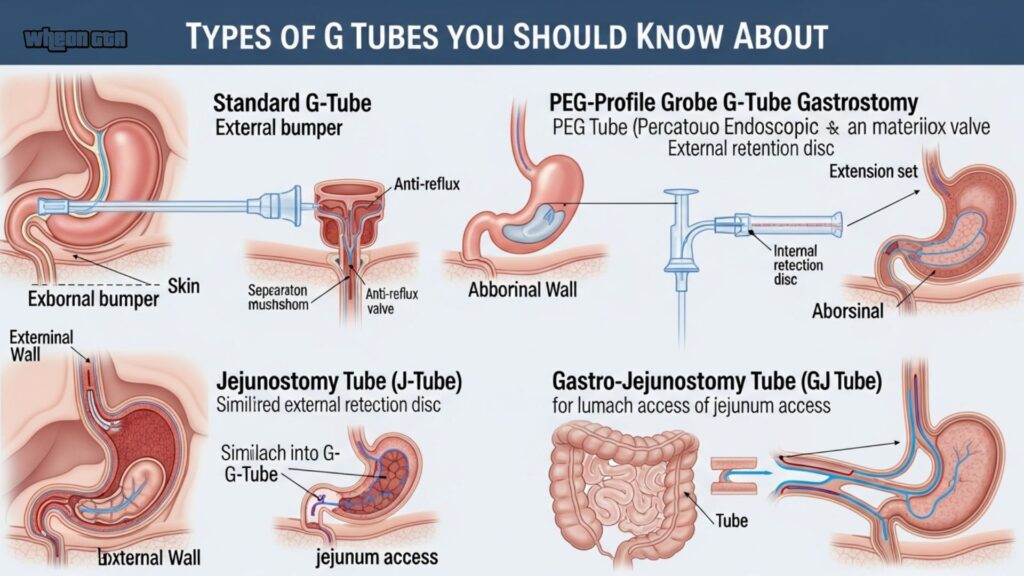
There are different kinds of g tubes. The doctor chooses the best one based on the child’s body and health needs.
Low-Profile G Tube (Button)
This type sits flat on the skin and looks like a small button.
Why parents like it:
- Less visible under clothes
- Comfortable for active kids
- Easy to connect during feeding
A short extension tube is attached only during feeding or medicine time.
Long G Tube
This tube is longer and hangs outside the belly.
When it’s used:
- Often placed first after surgery
- Helpful for newborns or healing skin
- Easy to handle during early care
Some children start with a long tube and later switch to a button-style g tube.
How Is a G Tube Placed?
A g tube is placed during a medical procedure while the child is asleep. The child does not feel pain during placement.
Doctors may use different methods, depending on the child’s condition:
- Surgical placement in an operating room
- Placement using a camera and small opening
- Placement through imaging guidance
The procedure usually takes less than one hour. Most children stay in the hospital for a short time so feeding can begin safely.
What Happens After G Tube Surgery?
After surgery, the care team watches the child closely. Pain medicine is given if needed. Feeding usually starts slowly and increases step by step.
Before going home, parents learn how to:
- Clean the g tube area
- Give feedings safely
- Give medicine through the tube
- Watch for problems
Many parents feel nervous at first. That feeling is normal. With practice, g tube care becomes part of the daily routine.
Daily Life With a G Tube
Living with a g tube does not stop a child from enjoying life. Most children play, sleep, go to school, and travel as usual.
Daily care includes:
- Washing hands before touching the g tube
- Cleaning the skin around the tube
- Checking for redness or leaks
- Securing the tube during play
Children can bathe and move normally once healing is complete. Clothes usually hide the tube, especially button-style g tubes.
Feeding Through a G Tube
Feeding through a g tube is simple once you learn the steps. Food goes directly into the stomach using gravity or a feeding pump.
Feedings may include:
- Special formula
- Blended foods (if approved by the doctor)
- Water for hydration
- Liquid medicine
Helpful Feeding Tips
- Go slow at first
- Keep the child comfortable
- Follow the feeding schedule
- Watch for vomiting or belly pain
Every child has a unique feeding plan created by healthcare experts.
Common G Tube Problems and How to Handle Them
Most g tube issues are small and easy to fix if caught early.
Leaking Around the Tube
This is common and often harmless. A small dressing can help. If leaking is heavy, contact the doctor.
Granulation Tissue
This is pink or red skin that may grow around the tube. It can be treated easily by medical staff.
Tube Falling Out
If the tube comes out, cover the area and call the doctor right away. Do not panic.
Signs of Infection
Watch for redness, swelling, fever, or bad-smelling drainage. Call the doctor if you see these signs.
How Parents Can Support Their Child
Children often follow their parents’ emotions. Staying calm helps the child feel safe.
Helpful ways to support your child:
- Explain the g tube in simple words
- Let them ask questions
- Keep routines normal
- Praise them for being brave
Some children worry about how the tube looks. Talking openly and kindly builds confidence.
Is a G Tube Safe?
Yes, a g tube is considered safe and widely used. Like all medical tools, it has risks, but serious problems are rare when care instructions are followed.
Important note:
This article is for education only. Always follow your doctor’s advice for your child’s care.
Conclusion
A g tube is not something parents plan for, but it often becomes a helpful solution. It supports growth, reduces stress during meals, and gives children the nutrition they need every day. With proper care, a g tube can greatly improve quality of life.
At first, g tube care may feel overwhelming. Over time, it becomes routine. With the right knowledge, support, and confidence, families can manage a g tube safely and successfully.
FAQs
Q: What is a g tube used for?
A: A g tube is used to give food, water, and medicine directly into the stomach when a child cannot eat enough by mouth. It helps support healthy growth and proper nutrition.
Q: Can a child eat normally with a g tube?
A: Yes, many children with a g tube still eat by mouth if it is safe. The g tube is used to add extra nutrition when needed.
Q: Is a g tube permanent?
A: No, a g tube can be temporary or long-term. Some children use it only until they can eat well by mouth again.
Q: Does a g tube hurt the child?
A: After healing, a g tube should not cause pain. Mild discomfort can happen at first, but it usually goes away.
Q: How do I know if there is a problem with the g tube?
A: Call the doctor if you see redness, swelling, fever, leaking, or if the tube comes out. Early care prevents bigger problems.