Grand Theft Meaning: What It Is and Why It Matters
Have you ever heard the term “grand theft” in a movie or news report and wondered what it really means? Maybe you’ve played games like Grand Theft Auto and thought, “Is this what it’s about?” As someone who’s spent years diving into legal terms for clarity, I’m here to break it down for you. Grand theft is a serious crime, but it’s not as complicated as it sounds. In this article, we’ll explore the grand theft meaning, its consequences, and how it differs from other types of theft. By the end, you’ll have a clear understanding of this legal term and why it matters.
Let’s dive in and unpack everything you need to know about grand theft in simple, everyday language!
What Does Grand Theft Mean?
Grand theft is a legal term used to describe stealing property that’s worth more than a certain amount of money or has specific value. Unlike minor theft (called petty theft), grand theft is a bigger deal because of the value of the stolen item or the circumstances of the crime. In most places, grand theft involves taking something valuable—like money, jewelry, or even a car—without permission.
For example, I once knew someone who had their expensive laptop stolen from their car. That was considered grand theft because the laptop was worth over $1,000. The thief didn’t just walk away with a warning—it was a serious crime with real consequences. The exact definition of grand theft depends on where you live, as laws vary by state or country.
How Is Grand Theft Different from Petty Theft?
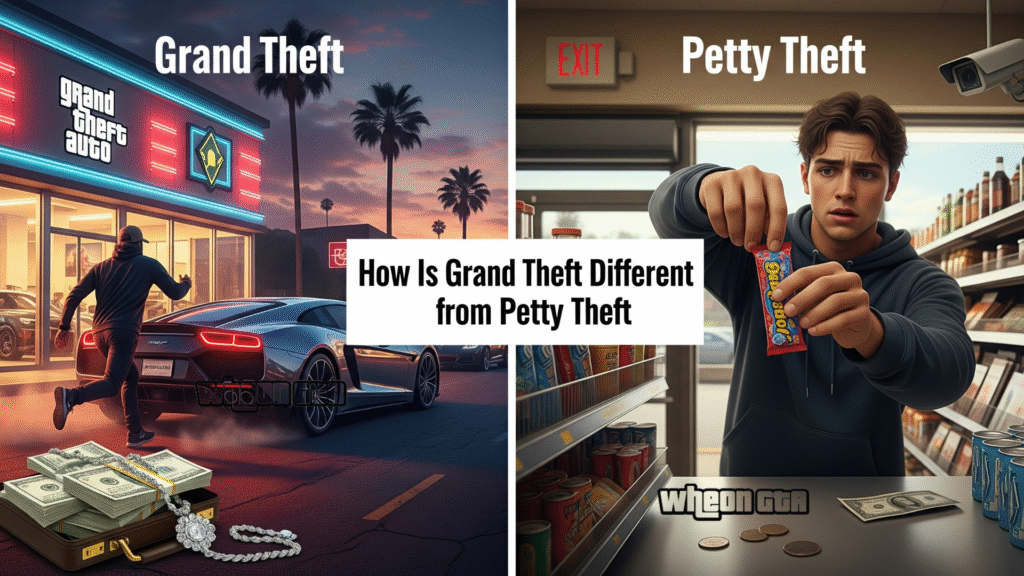
To understand grand theft, you need to know how it’s different from petty theft. Petty theft involves stealing something of low value, usually under a specific dollar amount (like $950 in California). Grand theft, on the other hand, involves higher-value items or specific situations, like stealing a car or firearm.
Here’s a quick comparison:
- Petty Theft: Stealing a $20 phone case from a store.
- Grand Theft: Stealing a $2,000 designer watch.
The line between the two often comes down to the value of the stolen property. However, some items, like cars or guns, are automatically considered grand theft, no matter their worth. This distinction is key because grand theft carries harsher penalties.
Examples of Grand Theft
Let’s make this real with some examples. Grand theft can happen in many ways, and it’s not just about stealing from a store. Here are a few scenarios:
- Stealing a car: Taking someone’s vehicle without permission is often classified as grand theft auto.
- High-value jewelry: Snatching a diamond ring worth thousands of dollars from a home.
- Embezzlement: An employee secretly taking large sums of money from their company.
I remember reading about a case where someone stole expensive equipment from a construction site. The equipment was worth over $10,000, so it was charged as grand theft. These examples show how grand theft covers a wide range of situations.
What Makes Something Grand Theft?
The definition of grand theft depends on local laws, but there are common factors:
- Value of Property: Most places set a dollar threshold, like $950 or $1,000. If the stolen item is worth more, it’s grand theft.
- Type of Property: Some items, like cars, livestock, or firearms, are considered grand theft regardless of value.
- Method of Theft: If the theft involves fraud, burglary, or deceit (like embezzlement), it may be classified as grand theft.
For instance, in my hometown, stealing a cow could land you a grand theft charge because livestock is specifically protected under local laws. Check your local laws to understand what qualifies as grand theft where you live.
Legal Consequences of Grand Theft
Grand theft is no small matter. The consequences can be serious and life-changing. Depending on the situation and location, penalties may include:
- Fines: You could owe thousands of dollars in fines.
- Jail Time: Grand theft can lead to months or even years in jail, especially if it’s a felony.
- Probation: You might be monitored by the court for years.
- Criminal Record: A conviction can make it harder to get a job or housing.
I once spoke with a lawyer who explained how a single grand theft charge could haunt someone for years. For example, a young person who stole a luxury watch might struggle to find work because of their criminal record. It’s a reminder to think twice before taking something that isn’t yours.
Grand Theft vs. Other Crimes
Grand theft isn’t the same as other crimes like robbery or burglary, though they’re related. Here’s how they differ:
- Robbery: Involves using force or fear to steal, like threatening someone to hand over their wallet.
- Burglary: Breaking into a building with the intent to steal or commit a crime.
- Grand Theft: Focuses on the act of stealing valuable property, without necessarily using force or breaking in.
Think of it this way: If someone breaks into a house and steals a TV worth $2,000, that’s both burglary and grand theft. Understanding these differences helps clarify why grand theft is its own category.
How Is Grand Theft Prosecuted?
When someone is accused of grand theft, the legal process kicks in. Here’s how it typically works:
- Investigation: Police gather evidence, like security footage or witness statements.
- Charges Filed: Prosecutors decide if it’s grand theft based on the value or type of property.
- Court Case: The accused can plead guilty or fight the charges in court.
- Sentencing: If guilty, the judge decides the punishment.
I recall a local news story about a man who stole expensive electronics from a store. The police used camera footage to catch him, and he faced grand theft charges. The process can be long and stressful, so it’s best to avoid trouble in the first place.
How to Avoid Grand Theft Charges
Nobody wants to deal with legal trouble, so here are some tips to stay on the right side of the law:
- Respect Property: Don’t take anything that doesn’t belong to you, even as a “joke.”
- Be Honest at Work: Avoid mishandling money or items if you work with cash or inventory.
- Know the Law: Understand what qualifies as grand theft in your area to avoid accidental violations.
I once helped a friend double-check their workplace policies to avoid any misunderstandings about borrowing equipment. Being aware and cautious can save you from big problems.
Grand Theft in Popular Culture
The term “grand theft” is super popular thanks to the video game Grand Theft Auto. But the game exaggerates the crime for entertainment. In real life, grand theft isn’t about wild car chases or heists—it’s a serious offense with real-world consequences. Still, the game has made the term familiar to millions, which is why so many people search for “grand theft meaning.”
I remember playing the game as a teen and joking about “grand theft auto” without fully understanding the legal side. It’s a fun game, but it’s not a guide to real-world behavior!
Why Understanding Grand Theft Matters
Knowing what grand theft means can help you in many ways. If you’re a victim, you’ll understand your rights and what to report to the police. If you’re accused, you’ll know the seriousness of the charge. Plus, being informed helps you make better choices and avoid legal trouble.
I’ve always believed knowledge is power. When I learned about theft laws, it made me more careful about protecting my belongings and respecting others’ property. It’s a small step that can make a big difference.
Conclusion
Grand theft might sound like something from a video game or movie, but it’s a real crime with serious consequences. Whether it’s stealing a car, expensive jewelry, or money from a company, grand theft involves taking valuable property without permission. The penalties—like fines, jail time, or a criminal record—can change someone’s life. By understanding the grand theft meaning, you can protect yourself, avoid legal issues, and make smarter choices.
If you’re ever unsure about a situation, check local laws or talk to a legal expert. Staying informed is the best way to stay safe. Got questions about grand theft? Check out the FAQs below for quick answers!
Frequently Asked Questions
Q: What is the difference between grand theft and petty theft?
A: Grand theft involves stealing property worth more than a certain amount (like $950 in some places) or specific items like cars. Petty theft is stealing less valuable items.
Q: Is grand theft a felony?
A: It can be a felony or, depending on the value of the stolen property and local laws. Higher-value thefts are more likely to be felonies.
Q: Can you go to jail for grand theft?
A: Yes, grand theft can lead to jail time, especially if it’s a felony. Sentences vary but can range from months to years.
Q: What is grand theft auto?
A: Grand theft auto is stealing a vehicle, like a car or truck, without permission. It’s a type of grand theft.
Q: How can I protect myself from grand theft charges?
A: Always respect others’ property, be honest at work, and know your local theft laws to avoid accidental violations.