
DOGE HHS Migrant Housing Contract: A Story of Savings, Scandals,
Hey there! Imagine you’re paying a huge bill every month for a house that’s just sitting empty – no one living in it, but you’re still footing the cost for lights, upkeep, and security. Sounds crazy, right? Well, that’s kind of what happened with a big government deal involving migrant kids. Today, we’re diving into the DOGE HHS migrant housing contract.
It’s a tale of taxpayer money, empty buildings, and some eyebrow-raising connections. Stick with me – I’ll break it down simply, like chatting over coffee, so you get the full picture without the jargon.
What Is DOGE and Why Does It Matter?
Let’s start at the beginning. DOGE stands for the Department of Government Efficiency. It’s a new group created under President Donald Trump’s second term to cut waste in the federal government. Think of it as a team of sharp-eyed watchdogs, led by folks like Elon Musk and Vivek Ramaswamy, sniffing out bad deals that drain your wallet.
DOGE’s job? Fight fraud, trim fat, and make sure every dollar counts. They’ve already slashed billions in other areas, like DEI programs and refugee services. For everyday Americans worried about high taxes and border issues, this is huge. It’s like when you review your bank statement and cancel that unused gym membership – but on a massive scale.
In real life, I’ve seen friends struggle with rising costs while hearing about government overspending. Stories like this remind us why efficiency matters. DOGE isn’t just talk; they’re acting fast to fix things.
The HHS Migrant Housing Contract: What Went Down?
Now, onto the main event: the HHS migrant housing contract. The Department of Health and Human Services (HHS) handles care for unaccompanied migrant children crossing the border. These kids need safe places while officials sort things out.
Enter Family Endeavors, a San Antonio nonprofit (also called Endeavors). They’ve been around since 1969, helping with disasters, veterans, and migrants. In 2021, they got a big contract to run an “overflow” facility in Pecos, Texas. This place was meant for emergency housing when regular shelters filled up.
The Pecos Facility: From Busy to Bare
Picture a massive building in West Texas, equipped with beds, medical rooms, and cameras – all ready for action. From March 2021 to March 2023, and again from September 2023 to February 2024, it housed over 40,000 kids. That’s a lot of help during busy border times.
But by early 2025, things changed. Border crossings dropped, and the facility sat empty. Yet, HHS was still paying $18 million a month – that’s over $215 million a year! Why? Endeavors said they needed cash for upkeep: leases, vaccine storage, security cams, and daily federal checks. They argued it had to stay “ready” for any surge.
It’s like keeping a spare room stocked for guests who never show. Practical in theory, but costly if unused.
Why DOGE Stepped In and Cut the Deal
DOGE spotted this in late February 2025 and said, “Enough!” They pushed HHS to end the contract, saving taxpayers big bucks right away. National shelter occupancy was below 20%, so why pay for extras?
This fits DOGE’s bigger push against wasteful immigration spending. They’ve axed other contracts too, like a $1.1 billion one for refugee legal services. It’s part of tightening border security and rethinking how we handle migrants.
Allegations of Conflict and Corruption: The Juicy Details
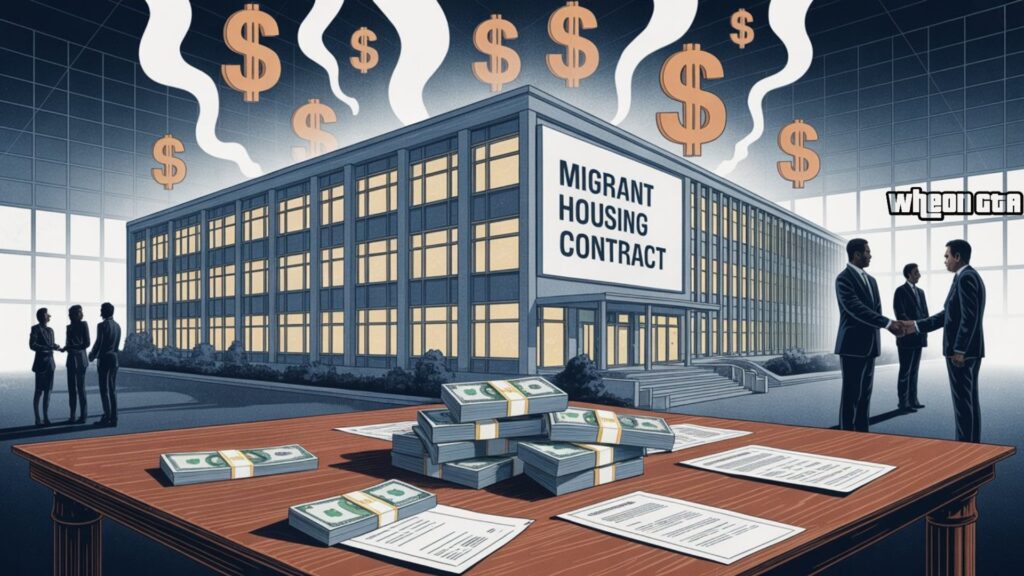
Here’s where it gets spicy. DOGE didn’t just call out the empty building – they pointed fingers at connections. A former ICE worker and Biden transition team member joined Endeavors in early 2021. Soon after, the nonprofit landed a “sole-source” contract – meaning no bidding war, just a direct award.
Result? Endeavors’ cash and investments ballooned from $8.3 million in 2020 to $520.4 million in 2023. Revenues hit $1.1 billion in 2022! DOGE suggested this smelled fishy, like insider deals during the Biden era’s border surge.
Whistleblowers have raised alarms too. Some say nonprofits like Endeavors ignored red flags in placing kids, leading to thousands going missing. Investigations by folks like Senator Chuck Grassley are digging into up to 300,000 lost migrant children.
But is this proof of wrongdoing? Not necessarily. Connections alone aren’t corruption – they’re common in government work. Still, it raises questions about transparency in federal contracts for migrant care.
Family Endeavors’ Side: “We’re Not the Bad Guys”
Endeavors isn’t taking this lying down. They fired back with a statement: “Any claims of corruption or mismanagement are baseless.” They’ve helped migrants since 2012, long before Biden. In 2021, they were one of 15 groups stepping up during a crisis.
They stress: Government picks the sites and decides usage. Endeavors just followed orders, keeping things ready. Plus, they’ve got a track record in other areas, like Austin’s homeless programs – though those are now under scrutiny too.
It’s like a family business saying, “We’ve been doing this for years – don’t blame us for the empty house; blame the landlord who stopped sending guests.”
Broader Impacts: Taxpayer Wins and Immigration Shifts
So, what does this mean for you? First, savings! Ending this deal frees up $215 million yearly for better uses, like schools or roads. DOGE’s cuts are part of a wave: They’ve nuked $335 million more in contracts recently.
On immigration, it signals change. With fewer crossings (down 50% since January 2025), we don’t need as many facilities. But critics worry: What if surges return? Cutting too deep could leave kids without safe spots.
Compare to other nonprofits: Many rely on government funds for migrant aid. This termination might make them rethink operations, focusing on efficiency over expansion.
Criticisms of DOGE: Is There a Double Standard?
Not everyone’s cheering. Some point out Elon Musk’s companies, like SpaceX and Tesla, have snagged $18 billion in federal contracts since 2015 – many under Biden. Will DOGE touch those? Skeptics say no, calling it a conflict.
Others argue DOGE’s fast cuts hit vital programs, like meals for seniors or cancer research – though DOGE says they’re targeting waste, not essentials. And DOGE itself? Rumors swirled it disbanded early, but they clarified: It’s transitioning, still saving billions.
Disclaimer: This is based on public reports. No one’s been charged with crimes yet, and views differ. Always check multiple sources for the full story.
Wrapping It Up: Lessons from the DOGE HHS Saga
Whew, we’ve covered a lot! The DOGE HHS migrant housing contract shows how government deals can balloon without oversight. By ending this empty-facility payout, DOGE delivered real savings and spotlighted potential issues in immigration funding. It’s a win for taxpayers tired of waste, but a reminder that migrant kids’ care needs balance.
Looking ahead, expect more cuts as DOGE keeps hunting inefficiencies. Whether you’re pro-border security or concerned about humanitarian aid, this story highlights the need for transparent, smart spending. What do you think – is DOGE on the right track? Share in the comments!
FAQ Section
Q: What led to the DOGE HHS migrant housing contract termination?
A: DOGE identified wasteful spending on an empty Pecos facility run by Family Endeavors, costing $18M monthly. With low occupancy nationwide, they pushed HHS to end it, saving $215M yearly. This fits broader efforts to cut fraud in government contracts for migrant care, amid dropping border crossings.
Q: Is there a conflict of interest in the DOGE HHS migrant housing contract?
A: DOGE highlighted a former Biden aide joining Endeavors before securing a no-bid deal, boosting their assets to $520M. Endeavors denies wrongdoing, citing decade-long experience. While connections raise questions, no proven corruption exists; it’s common in federal migrant housing contracts.
Q: How did the DOGE HHS migrant housing contract affect taxpayers?
A: The termination saves over $215M annually from unused facilities. It’s part of DOGE’s waste-fighting mission, redirecting funds from immigration overflow sites. Taxpayers benefit from efficiency, but critics worry about readiness for future migrant surges in border housing.
Q: What is Family Endeavors’ role in the DOGE HHS migrant housing contract?
A: As a nonprofit, Endeavors operated the Pecos site for unaccompanied minors since 2021, housing 40,000 kids. They maintained it ready per HHS rules, but DOGE ended the deal for emptiness. Endeavors calls corruption claims baseless, emphasizing their proven track record in migrant aid.
Q: Will the DOGE HHS migrant housing contract cut impact border security?
A: With crossings down 50%, the cut reduces costs without immediate harm. DOGE aims at waste in HHS contracts, but some fear gaps in child housing if numbers rise. It’s a shift toward efficient immigration policies, balancing savings and humanitarian needs.