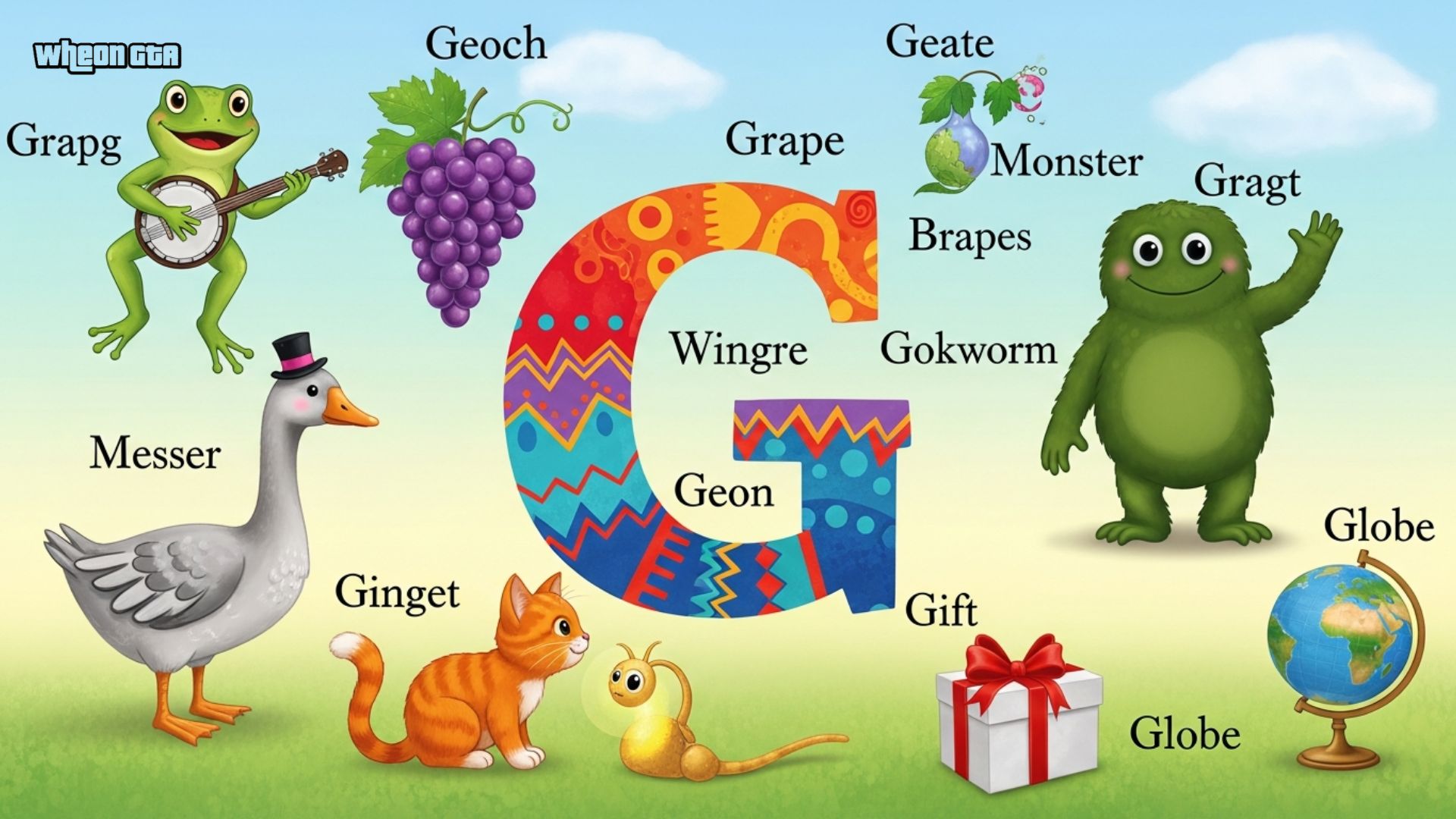
Words That Start With G A Simple and Helpful Guide
Learning new words is like opening new doors in your mind. Every new word helps you speak better, read faster, and write more clearly. Today, we are talking about words that start with g. These words are very common in daily life, school books, and conversations.
From simple words like go and good to longer words like gentle and growth, the letter G gives us many useful words. This guide is written in very easy English, so kids, students, parents, and teachers can all enjoy and understand it without stress.
Why Learning Words That Start With G Is Important
Words that start with G are used everywhere. You hear them at home, in school, and even while playing games or watching cartoons. Learning them helps build a strong base in English.
Here is why these words matter:
- They improve reading and spelling skills
- They help kids speak clearly
- They are common in exams and homework
For example, when a child learns the word good, they can describe people, food, and feelings easily. That is how learning starts, step by step.
Easy Words That Start With G for Beginners
For young learners and beginners, starting with short and easy words is best. These words are simple to read, write, and remember.
Some easy examples are:
- Go
- Get
- Give
- Good
- Game
These words are often used in daily sentences. A child might say, “Let’s go play a game,” which already uses two G words naturally.
Common Words That Start With G Used in Daily Life
Many words that start with G are part of our everyday language. We use them without even thinking about it.
Here are some common ones:
- Great
- Green
- Group
- Grow
- Gift
For example, parents often say, “You did a great job.” Teachers talk about group work in class. These words are simple but very powerful.
Words That Start With G for Kids (With Meaning)
Kids learn better when words are explained simply. Below are some kid-friendly G words with easy meanings.
Simple G Words and Meanings
- Game – something you play for fun
- Gift – something you give to someone
- Girl – a female child
- Goat – a farm animal
- Green – a color
These words help kids talk about their world. They can point to things, name animals, and describe colors easily.
Positive Words That Start With G
Positive words help build good habits and kind behavior. Many positive words start with the letter G.
Some good examples are:
- Good
- Gentle
- Grateful
- Generous
- Glad
For example, teaching a child to say “I am grateful” helps build good manners. These words are also great for writing essays and stories.
Action Words That Start With G
Action words, also called verbs, show what someone is doing. Many action words start with G and are used in daily speech.
Common action words include:
- Go
- Grab
- Give
- Grow
- Guess
For example, “Please give me the book” or “Plants grow with water.” These simple verbs help children form full sentences.
Describing Words That Start With G
Describing words help us explain how something looks, feels, or sounds. These words make sentences more interesting.
Some describing G words are:
- Great
- Green
- Gentle
- Giant
- Golden
For example, instead of saying “a dog,” we can say “a gentle dog.” This makes the sentence clearer and nicer.
Long Words That Start With G for Advanced Learners
As students grow, they learn longer and more advanced words. These words are often used in books and exams.
Examples include:
- Government
- Geography
- Generation
- Guidance
- Growth
These words may look hard, but they become easy with practice. Teachers often introduce them in higher classes.
How to Teach Words That Start With G at Home
Parents and teachers can make learning fun by using simple methods.
Helpful tips:
- Use flashcards with pictures
- Make short sentences together
- Play word games and quizzes
- Read storybooks with G words
For example, while reading a story, parents can point to words like good or girl and explain them softly.
Common Mistakes While Learning G Words
Some learners confuse similar sounds or spellings. This is normal, especially for kids.
Common mistakes include:
- Mixing G with J sounds
- Spelling errors in long words
- Forgetting meanings
The best solution is practice. Repeating words and using them in sentences helps fix mistakes naturally.
Fun Activities Using Words That Start With G
Learning should always be fun. Here are some simple activities:
- Find five G words in a book
- Write a short story using G words
- Draw pictures and label them
These activities help children remember words for a long time.
Conclusion
Words that start with G are an important part of learning English. They help children, students, and beginners speak better, write clearly, and understand reading material more easily. From easy words like go and good to longer words like growth and government, G words are used everywhere.
By practicing a little every day, anyone can improve their vocabulary. Keep learning, keep practicing, and most importantly, enjoy the journey of words.
FAQs
Q: What are some easy words that start with g for kids?
A: Easy words that start with g for kids include go, good, game, gift, and girl. These words are simple, commonly used, and easy to remember. They help children form basic sentences and improve speaking skills.
Q: Why should students learn words that start with g?
A: Learning words that start with g helps students build strong vocabulary skills. These words are common in books, exams, and daily conversations. Knowing them improves reading, writing, and understanding.
Q: Are there positive words that start with g?
A: Yes, many positive words start with g, such as good, gentle, grateful, generous, and glad. These words are useful for teaching good behavior and writing positive sentences.
Q: How can parents teach words that start with g at home?
A: Parents can teach words that start with g using flashcards, storybooks, games, and daily conversations. Simple repetition and fun activities make learning easy and enjoyable for kids.
Q: Are words that start with g used in daily life?
A: Yes, words that start with g are used every day. Words like good, go, get, and great appear in normal conversations, school lessons, and written text very often.